
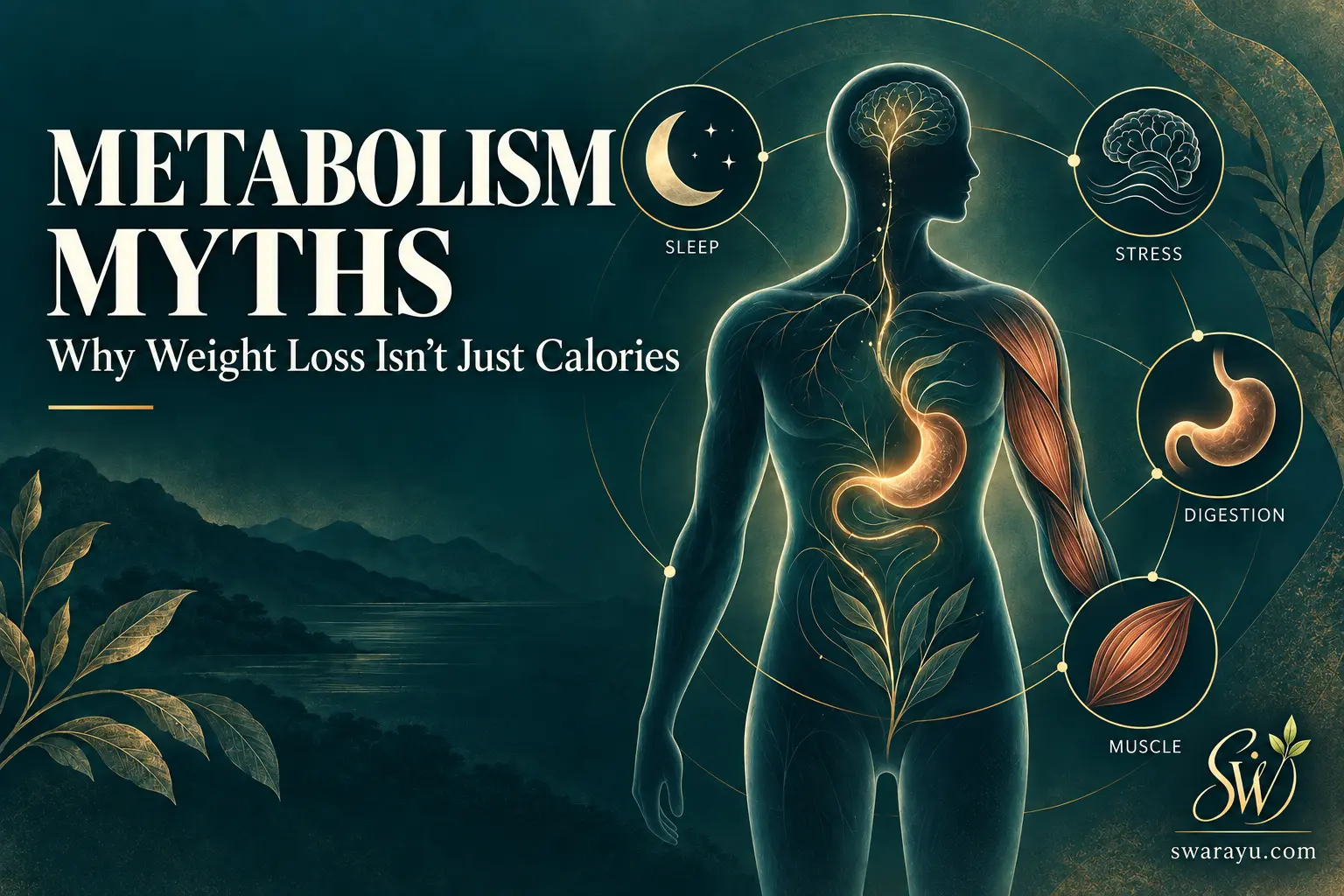
What May Be Limiting Weight Loss?
Two people may eat similar food and follow the same exercise plan but show very different results.
Weight loss may become difficult when there is:
- Poor sleep
- Chronic stress
- Reduced muscle mass
- Digestive disturbance
- Frequent cravings
- Hormonal transition
- Inadequate recovery
- Repeated restrictive dieting
Reducing food further does not always correct these factors.
Exercise Matters—but So Does Recovery
Exercise supports muscle, strength and metabolic health. But excessive exercise without adequate food, sleep and recovery may leave the body tired rather than metabolically stronger.
The goal is not merely to become lighter. It is to reduce unhealthy fat while preserving muscle, energy and function.
Ayurveda Looks Beyond Food Quantity
In Ayurveda, Agni represents the body’s capacity to digest, transform and utilise what it receives.
A person may eat healthy food yet experience bloating, heaviness, cravings, irregular stools or sleepiness after meals. These are important metabolic signals.
The question is therefore not only, “How much are you eating?” It is also, “How well is your body processing what you eat?”
Clinical Crux
Weight loss is not just about eating less and exercising more.
If the body is not responding, assess digestion, sleep, stress, muscle, hormones and recovery before making the diet more restrictive.
Sometimes the body does not need another strict diet. It needs a plan matched to its present metabolic capacity.
Frequently Asked Questions
Do calories matter?
Yes. But calories alone do not explain differences in appetite, digestion, muscle, sleep and metabolic response.
Why am I not losing weight despite exercising?
Poor recovery, disturbed sleep, stress, muscle loss or an underlying metabolic or hormonal condition may be limiting progress.
Is eating less always the solution?
No. Excessive restriction may increase fatigue, cravings and muscle loss. Food quantity must be planned according to the person’s health and metabolic capacity.